Sa, Ra, Ma: What an Ancient Musical Scale Can Teach Us About Modern Innovation

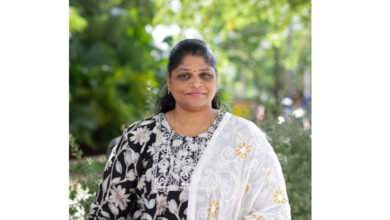
By- Mr. Satya Duvvuri, Professor of Practice at Paari School of Business, SRM University AP.
In Indian classical music, a raga begins with the simplest of notes. Sa. Ra. Ma. From these foundations, entire universes of melody unfold. No master musician skips the basics, and none stops practicing them.
Innovation works the same way.
Why Simplicity Is the Hardest Design Challenge
Design Thinking is one of the most celebrated problem-solving approaches in the world. Yet its power is often lost in complexity: multi-stage diagrams, specialized vocabulary, and toolkits that intimidate more than they inspire.
SRM University AP set out to solve a problem about problem-solving: how do we make structured thinking intuitive enough for young leaders to use on day one? Their answer, Sa-Ra-Ma, reduces Design Thinking to three memorable movements, in the language and rhythm learners already know.
The Three Notes of Problem-Solving
Sa: Samajho (Understand) is the root note. In music, it anchors everything that follows. In problem-solving, it means empathy before action: listening to the people living with the problem and resisting the urge to rush to answers. Human-centricity isn’t a soft skill. It is the foundation of any solution that lasts.
Ra: Racho (Create) is the rising note, where energy and imagination take over. Here, innovation means more than novelty. It means designing something impactful, something that meaningfully changes a situation for real people.
Ma: Mano (Accept & Improve) is the note of resolution, and perhaps the most underrated. Iteration asks us to put our ideas into the world, listen to feedback without ego, and refine. The best creators are not those who never fail, but those who learn fastest.
Three Lessons for Leaders
- Slow down to speed up. Teams that invest in understanding save time later. Organizations that skip it pay for it in rework.
- Make creativity a habit, not an event. Innovation should not wait for an offsite or a hackathon. It is a muscle trained through repeated practice.
- Treat feedback as fuel. A culture that welcomes feedback improves continuously, while one that fears it stagnates.
When Young Minds Pick Up the Tune
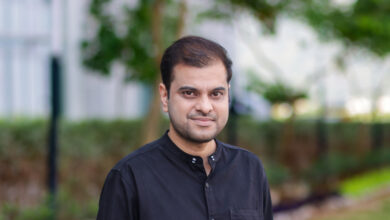
These principles have been put into practice through hands-on workshops for 11th and 12th-grade students across 8 branches of City Montessori School, Lucknow, and several leading schools in Jammu. Conceptualized and delivered by Mr. Satya Duvvuri (Professor of Practice, Paari School of Business, SRM University AP) and spearheaded by Mr. Akshay Nanda (Regional Manager, SRM University AP), the sessions showed that young learners need no heavy jargon, only a clear path and room to try.
A Closing Note
A scale is not the music. It is the beginning of music. Likewise, a framework is not the solution. It is the beginning of the thinking that finds one.
If we give the next generation the right foundations, and trust them to improvise, they will compose solutions we haven’t yet imagined.
Understand deeply. Create boldly. Accept and improve endlessly.
How are you helping young people turn challenges into opportunities? Let’s continue the conversation.