Ten transformative guidelines for those who seek doctoral and postdoctoral programs abroad
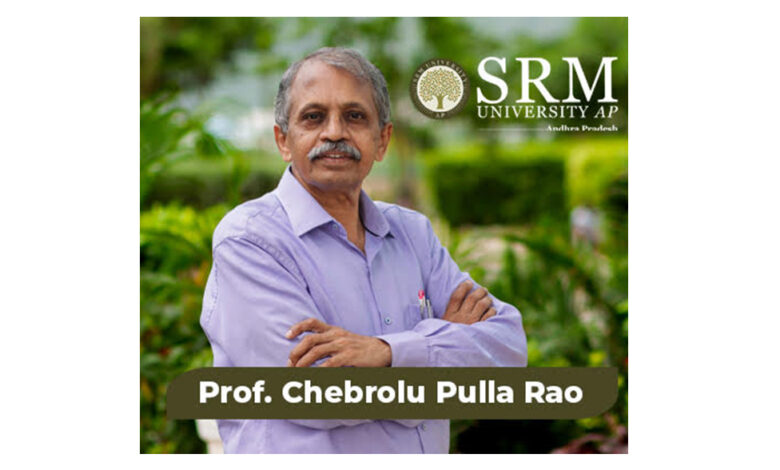
By- Prof. CP Rao, Professor, Dept. of Chemistry, SRM University -AP ( Amaravati)
A considerable fraction of our bachelor and masters’ students aspire to carry out their doctoral studies abroad, while most of our doctorates aspire to carry out their postdoctoral training abroad. All this is with a view to build a strong future, primarily in India, once they complete their respective programs abroad successfully.
While our students from India are smart with good subject knowledge and analyticalthinking, and further are fluent and clear in their communication, choosing their programandthe university without any flaw is a first step as well as a crucial step for their success. Several decades ago, almost all our students used to look forward to migrating to USA for their doctoral & postdoctoral studies, however, now Europe, Asia& Australia are equally competitive and provide enriching experience in diversedomains of research. In almost all these places Indian students received highest respect for their hard work, knowledge, trust worthiness and problem-solving capabilities. All this goes as a credit to the training that they received in India in their respective academic zones and further through the high value Indian family bonding.
However, at the stage of choosing their destinations for their higher research-oriented education and training, i.e., for doctoral and postdoctoral studies, these students need some guidance so that they choose a path which will undoubtedly lead to success. The following tentransformative guidelines would be of great support in choosing their research-based academic careers.
1). Firstly, one should search for research areas which are of interest to them. Keeping those as broadenough and not go with ultra-fine focus levels, because one can learn better on a broad-based topic rather than a confined and narrow one. The knowledge, experience and expertisethus acquired will be of immense help in framingtheir future career.
2.) Then one can search for the research groups / labs in which they will fit well by going through the group’s profiles. Look for those groups which are of internationalcharacter. Many make a mistake by choosing the places where there are lots of Indians or those from their own state or from their own district, etc. This is generally preferred by parents as they look forwardto the comfort of their ward. One should avoid this since you are going there to enrich your experience and knowledge and thereby your professional expertise, not just to confine within the closed ‘buddy’ attitude which is detrimental to future growth.
3). You can apply against an advertisement or even without any advertisement (particularly for postdoc positions), if that research group is of interest to you.Do not hesitate to send applications in double digits (of course to different research groups and different countries), so that something will click for you.Sorting out the country based on the ease of getting visa may help the process to lead to success.
4.)While you search for this, please keep your academic contacts intact in India, preferably be active and do not settle down at home. Keep doing some small projects or the other to continue with your contact which would help you get a strong &favorable letter that is equally important. The recommendation letter is given quite high importance when these fellowships are offered, more so for postdoctoral positions.
5.) But do not select places based on the fellowship amount. That is absolutely a wrong approach. Generally, even the lowest fellowship offered to a postdoc in any country is more than sufficient to lead a respectable life.
6.) Be prepared for an online interaction or interview if the potential employer prefers to do so (sometimes it can be more than one level of interaction). Nowadays this is followed mostly, both for Ph.D. and post-doctoral positions.
7).Ensure that you are well prepared from the point of view of subject understanding and the experimental handling in the lab followed by research data collection, interpretation and working in teams. Many postdoctoral mentors give a task of reviewing a manuscript that they receive from some journal in their area of research and or ask the postdoctoral fellow to draft a research project or extend help in writing a project proposal etc., or a combination of these. All this is highly relevant to those who go for their postdoctoral studies / training.
8.) Be prepared to work hard and get a good name for you, your Ph.D. mentor in India and the university from where you got your doctorate degree, in case of postdoctoral candidates. Of course, you should spare a fraction of your time for exploring their cultural values and diversity.
9.)Be with the mind-set to establish good research contacts with the mentor and his/her group members, which would be of great help in establishing your future career.
10.) Bring your outcomes to the notice of your Ph.D. mentor who would throw his/her experience to help you with a gross selection. This is highly important and helpful for post-doctoral candidates. There were cases (though small 0.1 to 1%) who had to leave the group (and hence the country) within a short span after joining owing to their incompatibility (from either side). This can be certainly avoided if the candidates go through all these steps rigorously.
All this will lead you to great successin fulfilling your doctoral and postdoctoral training aspirations abroad.